
Today, a car can automatically manage its lighting, monitor dozens of sensors, or report an engine anomaly without it being a surprise. In the boating industry, this evolution is now reaching pleasure boats through marine home automation and digital switching. From battery management to energy monitoring, including alarm systems or pump control, connected functions are multiplying on board. But unlike some closed systems sometimes perceived as complex, certain marine automation solutions seek to leave the owner in control of their electrical installation and settings. An analysis.
Marine automation: automation systems that go beyond onboard comfort
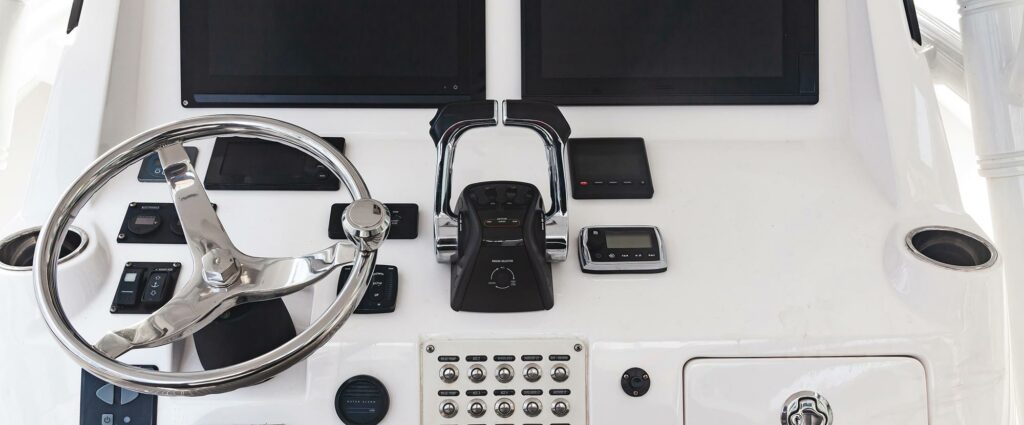
Long reserved for yachts, marine automation is becoming more accessible on sailboats and mid-sized motorboats. A vessel with an integrated automation system can now centralize numerous pieces of equipment from a touchscreen or a smartphone.
In practical terms, marine automation allows for the management of, for example:
- onboard lighting, with automatic switching off or on of certain lights or the creation of moods according to navigation moments,
- energy monitoring, thanks to the tracking of batteries, solar panels, or electrical consumption,
- alarm systems, capable of signaling an intrusion, a water leak, or a circuit anomaly,
- heating and air conditioning, to automatically adjust the temperature according to conditions on board,
- audio and video systems, controllable from a centralized interface or a smartphone,
- autonomy devices, with control of charge levels and optimization of available energy on board,
- certain technical equipment such as pumps, the windlass, or auxiliary circuits.
This centralization also improves onboard safety by allowing the owner to keep an eye on their boat, even remotely.
Automating your boat without losing control
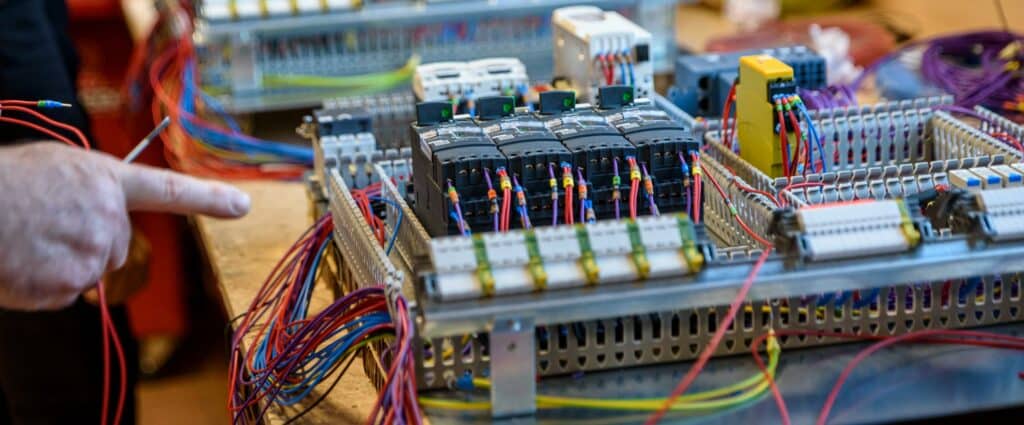
The challenge for boaters consists of being able to create automated routines, while maintaining an installation that is understandable, modifiable, and repairable independently. On a boat, the owner must indeed be able to identify a circuit, understand an alert, or adapt scenarios according to their navigation habits.
Unlike some complex or closed systems, new digital switching solutions also seek to simplify maintenance and onboard upgrades. On certain connected boats, equipment can be added, replaced, or reconfigured quickly without having to redo the entire electrical architecture.
Towards open and scalable marine automation
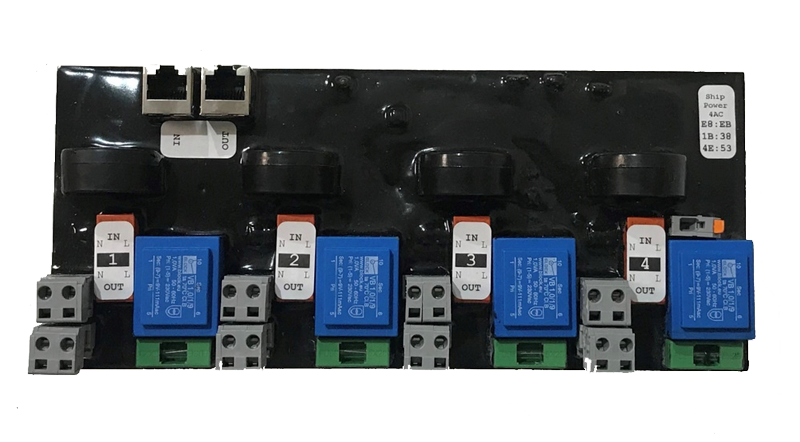
Certain platforms like ShipHeart focus on a more open approach to marine automation. Modules can thus be replaced quickly without it being necessary to redo the entire electrical installation, while circuits remain clearly identifiable to facilitate onboard interventions. The configuration, designed to remain accessible, offers a rare possibility in the world of digital switching: creating and adapting your own automated routines according to navigation habits and the boat’s real needs.
This logic also facilitates electrical diagnostics. The information provided by the system allows for faster identification of an anomaly, overconsumption, or a faulty circuit. This helps the owner or marine electrician during certain repairs and maintenance operations. Certain bypass or failsafe mode functions also allow for overcoming a failure or isolating defective equipment in order to maintain essential onboard functions without totally immobilizing the boat in the event of a malfunction.
At Koriolan, this approach to marine automation is based on a simple idea: beyond onboard safety, onboard technology must remain understandable, scalable, and truly useful on a daily basis. A philosophy that guides the development of ShipHeart digital switching and marine automation solutions, as well as the electrical design and installation projects carried out for boaters and shipyards, in refit as well as on new builds. Koriolan thus operates on projects in the Mediterranean, on the Atlantic coast, and more broadly across Europe.
 By Séverine Korovic